

Before cold pressing the plywood, it is necessary to leave the glued plywood for a period of time. The purpose of this is to allow some of the water in the glue to evaporate or penetrate into the veneer, which can reduce the water in the glue layer, increase the viscosity and increase the degree of bonding. It is easy to form a uniform and continuous adhesive layer during cold pressing to avoid too much adhesive penetrating into the wood, thereby improving the strength of the adhesive. If the storage time is insufficient and there is too much water in the adhesive layer, the adhesive will dry and lose its activity, reducing the adhesion, otherwise it will open the adhesive.
The function of cold pressing is to make the plywood in the plywood adhere to each other, thus making the plywood strong and flat. In this way, it is easy to install the plate during the hot pressing process via a mechanical plate without a backing plate. The use of cold press can also shorten the hot pressing time, improve production efficiency, reduce heat consumption, and ensure the quality of plywood.
In order to meet the requirements of the cold pressing process, the adhesive must have a certain initial viscosity, otherwise the plywood can not be well bonded together. The cold pressing process varies depending on the characteristics of the tree and the gum. Adjust for your own production.
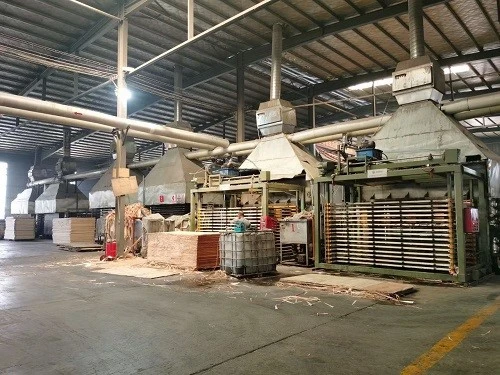
When cold pressing, the glued plywood is placed in a cold press to apply pressure. Plywood foot height is determined by the hot press. Generally about 1m, the plate pressure used is 0.8 ~ 1.0MPa, and the cold pressing time is 15 ~ 20min. To check the cold pressing effect, it is necessary to check whether the adhesion between the layers is good. For plywood with good adhesion, when lifting the veneer, you will see that the adhesive layer is slightly stretched (please note that you cannot draw when applying glue).


