

Hey there! As a supplier of veneer stacking machines, I've seen firsthand how temperature and humidity can throw a wrench into the smooth operation of these nifty pieces of equipment. Today, I'm gonna break down the impact of these environmental factors and why you should care.
Let's start with temperature. When it gets too hot, the parts of a veneer stacking machine can expand. You know how things tend to puff up when they're heated? Well, the same goes for the metal components in our machines. This expansion can lead to misalignments. For example, the conveyor belts might not run as smoothly as they should, or the stacking arms could be off - just a tiny bit, but it's enough to mess up the whole process. The veneer might not stack neatly, and you could end up with uneven stacks, which is a big no - no in the woodworking industry.
On the other hand, when it's too cold, the opposite happens. The metal contracts. That can cause parts to become too tight. Bolts might loosen up faster, and the machine could start making strange noises. It's like a cold - weather kind of stiffness. The motor has to work harder to keep things moving, which not only reduces the efficiency of the machine but also puts more wear and tear on it. Over time, this can lead to premature breakdowns and more frequent maintenance requirements.
Now, let's talk about humidity. High humidity is a real pain. Wood veneer itself is highly sensitive to moisture. When the air is humid, the veneer absorbs water. This makes it heavier and more flexible. In a veneer stacking machine, this can cause the veneers to stick together. The vacuum systems that are so important in many of our machines, like the 4 ft Vacuum Veneer Stacking Machine and the 8ft Vacuum Veneer Stacking Machine, might struggle to pick up individual veneers. They could end up picking multiple veneers at once, or not being able to hold onto them properly during the stacking process.
Moisture can also corrode the metal parts of the machine. Rust is a common enemy in high - humidity environments. The conveyor belts, the frames, and even the electrical components can be affected. Corrosion weakens the parts and can lead to failures. For instance, the chains that help move the veneers around might break, or the sensors that tell the machine what to do can malfunction.
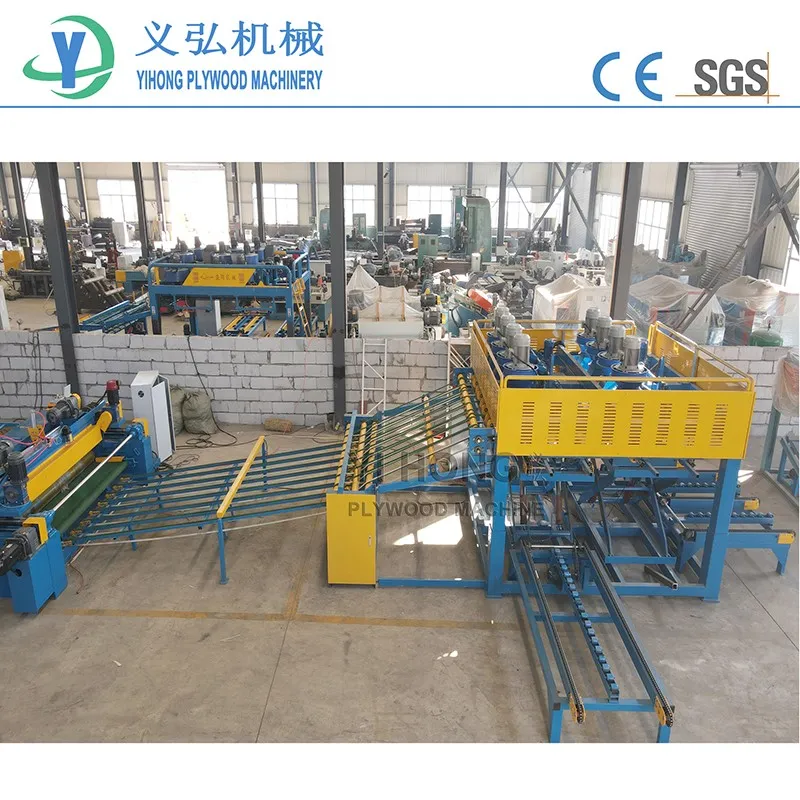

Low humidity is also a problem. When the air is too dry, the veneer loses moisture. It becomes brittle and prone to cracking. As the veneers move through the stacking machine, they might break into pieces. This not only messes up the production process but also leads to waste. The mechanical components of machines like the 8 ft Mechanical Veneer Stacking Machine can also be affected by low humidity. The dry air can cause static electricity to build up. This static can attract dust and debris, which can clog the moving parts and interfere with the machine's operation.
So, what can you do to mitigate these effects? Well, first off, you need to control the environment where the veneer stacking machine is located. You can use air - conditioning and dehumidifiers to keep the temperature and humidity within an acceptable range. For most veneer stacking machines, a temperature between 60°F and 80°F (15°C - 27°C) and a relative humidity of around 40% - 60% is ideal.
Regular maintenance is also crucial. Check the machine for signs of wear and tear, corrosion, or misalignment on a regular basis. Lubricate the moving parts to reduce friction, especially in cold temperatures. And keep the machine clean to prevent dust and debris from causing problems.
If you're in the market for a new veneer stacking machine, think about the environmental conditions in your facility. We offer a variety of models, each designed to handle different workloads and conditions. Whether you need a compact 4 - ft vacuum machine or a larger 8 - ft mechanical one, we've got you covered.
If you're interested in learning more about our veneer stacking machines or have any questions about how temperature and humidity might affect your operation, don't hesitate to reach out. We're here to help you make the best decision for your business, ensuring that your production runs smoothly and efficiently.
References
- "Wood Science and Technology" textbooks often cover the effects of environmental conditions on wood products.
- Industry reports on woodworking machinery operation and maintenance.