

In the forestry and wood processing industries, log infeed lines play a crucial role in streamlining the handling and transportation of logs from the storage area to the processing equipment. As a seasoned log infeed lines supplier, I've had the privilege of working closely with various mills and facilities, witnessing firsthand the diverse and essential fields that make up these systems. In this blog post, I'll explore the common fields found in log infeed lines, their functions, and how they contribute to the overall efficiency of the wood processing operations.
Log Sorting and Grading
One of the primary functions of a log infeed line is to sort and grade logs based on their size, quality, and species. This process ensures that the logs are routed to the appropriate processing equipment, maximizing the yield and value of the wood. Log sorting can be achieved through various methods, including mechanical sorting systems, optical scanners, and manual inspection.
Mechanical sorting systems use a series of conveyors, rollers, and gates to separate logs based on their size and shape. These systems are often used for large-scale operations where high throughput is required. Optical scanners, on the other hand, use advanced imaging technology to analyze the surface characteristics of the logs, such as color, texture, and density. This information is then used to classify the logs into different grades, allowing for more precise sorting and processing.

Manual inspection is another common method of log sorting, especially for smaller operations or when dealing with high-value logs. Trained operators visually inspect the logs and assign them to the appropriate grade based on their experience and knowledge. While manual inspection can be time-consuming and labor-intensive, it allows for a more detailed assessment of the logs' quality and can help identify any defects or irregularities that may not be detected by automated systems.
Log Feeding and Conveying
Once the logs have been sorted and graded, they need to be fed into the processing equipment in a controlled and efficient manner. This is where log feeding and conveying systems come into play. These systems are designed to transport the logs from the storage area to the processing equipment, ensuring a continuous and consistent flow of material.
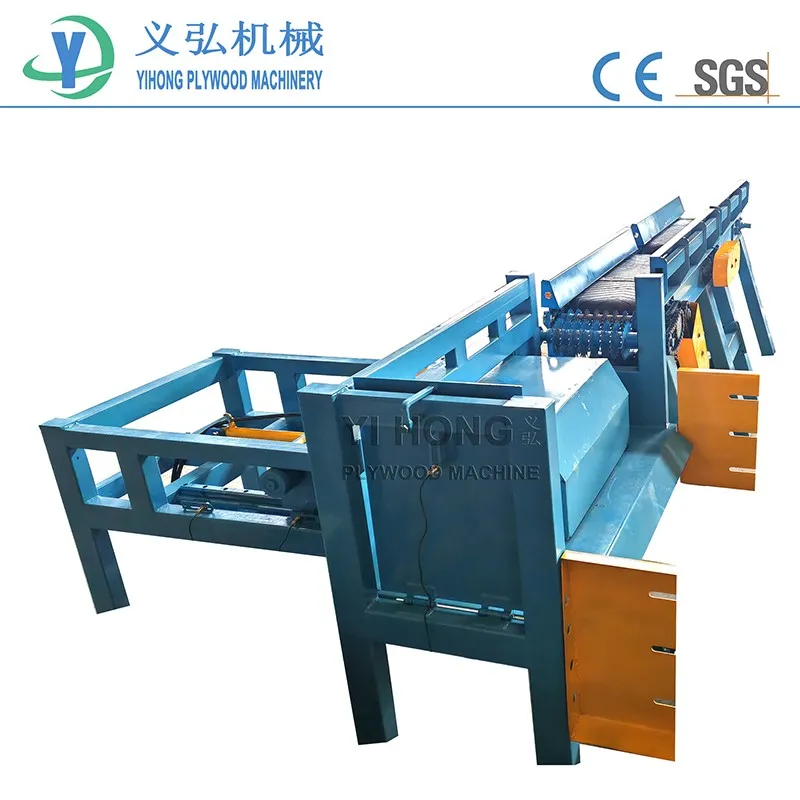
Log feeding conveyors are used to move the logs from the sorting area to the processing equipment. These conveyors can be either belt conveyors or chain conveyors, depending on the specific requirements of the operation. Belt conveyors are typically used for transporting smaller logs or when a smooth and gentle handling of the logs is required. Chain conveyors, on the other hand, are more suitable for transporting larger logs or when a higher capacity and durability are needed.
In addition to log feeding conveyors, log infeed lines may also include other types of conveying equipment, such as log transfer conveyors, log accumulation conveyors, and log alignment conveyors. Log transfer conveyors are used to transfer the logs from one conveyor to another, while log accumulation conveyors are used to store the logs temporarily and ensure a continuous supply of material to the processing equipment. Log alignment conveyors are used to align the logs in a specific orientation before they are fed into the processing equipment, improving the accuracy and efficiency of the processing operations.
Log Debarking and Reshaping
Before the logs can be processed into lumber or other wood products, they need to be debarked and reshaped. Debarking is the process of removing the bark from the logs, which not only improves the appearance of the wood but also reduces the risk of contamination and damage during processing. Reshaping is the process of trimming the ends of the logs and removing any irregularities or defects, ensuring that the logs are of a uniform size and shape.
Log debarking machines are used to remove the bark from the logs. These machines can be either drum debarkers or ring debarkers, depending on the specific requirements of the operation. Drum debarkers use a rotating drum to rub the bark off the logs, while ring debarkers use a series of rotating rings to grip and remove the bark. Both types of debarkers are effective at removing the bark, but they have different advantages and disadvantages, and the choice of debarker will depend on factors such as the type of logs, the production capacity, and the budget.
Log reshaping machines are used to trim the ends of the logs and remove any irregularities or defects. These machines can be either sawing machines or planing machines, depending on the specific requirements of the operation. Sawing machines use a saw blade to cut the ends of the logs, while planing machines use a rotating cutterhead to plane the surface of the logs. Both types of machines are effective at reshaping the logs, but they have different advantages and disadvantages, and the choice of machine will depend on factors such as the type of logs, the production capacity, and the budget.
Log Measuring and Scaling
Accurate measurement and scaling of the logs are essential for determining their volume, value, and suitability for processing. Log measuring and scaling systems are used to measure the length, diameter, and volume of the logs, as well as to calculate their weight and value. This information is then used to determine the appropriate processing method and to optimize the yield and value of the wood.
Log measuring systems can be either manual or automated. Manual measuring systems typically use a tape measure or a caliper to measure the length and diameter of the logs, while automated measuring systems use sensors and lasers to measure the logs' dimensions. Automated measuring systems are more accurate and efficient than manual measuring systems, especially for large-scale operations or when dealing with a high volume of logs.
Log scaling systems are used to calculate the volume and value of the logs based on their measured dimensions. These systems can be either manual or automated, depending on the specific requirements of the operation. Manual scaling systems typically use a scaling stick or a log rule to calculate the volume of the logs, while automated scaling systems use software and algorithms to calculate the volume and value of the logs based on their measured dimensions and other factors, such as the species of the wood and the market price.
Safety and Maintenance
Safety and maintenance are crucial aspects of any log infeed line operation. These systems involve heavy machinery and moving parts, which can pose a significant risk to the operators if not properly maintained and operated. Therefore, it's essential to implement a comprehensive safety and maintenance program to ensure the safe and efficient operation of the log infeed line.
Safety measures should include the installation of safety guards and barriers to prevent access to the moving parts of the machinery, as well as the use of personal protective equipment (PPE) such as hard hats, safety glasses, and gloves. Operators should also be trained on the proper use and maintenance of the equipment, as well as on the potential hazards and risks associated with the operation of the log infeed line.
Maintenance measures should include regular inspections and servicing of the equipment to ensure that it's in good working condition. This may include lubricating the moving parts, checking the belts and chains for wear and tear, and replacing any worn or damaged components. It's also important to keep the equipment clean and free of debris to prevent the buildup of dirt and dust, which can cause damage to the machinery and reduce its efficiency.
In conclusion, log infeed lines are complex and essential systems that play a crucial role in the forestry and wood processing industries. By understanding the common fields found in log infeed lines, their functions, and how they contribute to the overall efficiency of the wood processing operations, you can make informed decisions when selecting and implementing a log infeed line for your facility.
If you're in the market for a log infeed line or have any questions about our products and services, please don't hesitate to contact us. Our team of experts is always available to provide you with more information and to help you find the right solution for your specific needs.
References
- Forest Products Society. (2010). Wood Handbook: Wood as an Engineering Material. Madison, WI: Forest Products Society.
- Smith, J. D. (2015). Logging and Sawmilling. New York, NY: Routledge.
- Stevens, J. R. (2018). Wood Processing and Utilization. New York, NY: Springer.