

As a supplier of Glue Spreading Machines, I've witnessed firsthand the critical role that glue spreading pressure plays in the plywood production process. The right pressure ensures optimal bonding, which is essential for the quality and durability of the final product. In this blog, I'll share some insights on how to adjust the glue spreading pressure according to the glue type.
Understanding the Basics of Glue Spreading Pressure
Before delving into the adjustment process, it's important to understand what glue spreading pressure is and why it matters. Glue spreading pressure refers to the force applied to the glue as it is spread onto the surface of the material. This pressure affects the thickness and uniformity of the glue layer, which in turn impacts the bonding strength.
If the pressure is too low, the glue may not spread evenly, resulting in thin or patchy areas that can weaken the bond. On the other hand, if the pressure is too high, the glue may be squeezed out from between the layers, leading to waste and potential bonding issues. Therefore, finding the right balance is crucial.
Factors Affecting Glue Spreading Pressure
Several factors can influence the optimal glue spreading pressure, including the type of glue, the material being glued, and the specific requirements of the production process. However, in this blog, we'll focus primarily on the glue type.
Different types of glue have different viscosities, drying times, and bonding strengths. These properties determine how the glue behaves under pressure and how it should be applied. For example, a high-viscosity glue may require more pressure to spread evenly, while a low-viscosity glue may spread more easily with less pressure.
Adjusting Glue Spreading Pressure Based on Glue Type
Let's take a closer look at some common types of glue used in plywood production and how to adjust the glue spreading pressure accordingly.
1. Urea - Formaldehyde (UF) Glue
UF glue is one of the most widely used glues in the plywood industry due to its low cost and good bonding properties. It has a relatively low viscosity, which means it spreads easily.
- Initial Pressure Setting: Start with a relatively low pressure, around 2 - 3 bar. This allows the glue to spread evenly without excessive force.
- Observation and Adjustment: As the glue is being spread, observe the thickness and uniformity of the glue layer. If the layer is too thin or patchy, gradually increase the pressure in small increments (e.g., 0.5 bar at a time) until the desired thickness and uniformity are achieved. If the glue is being squeezed out, reduce the pressure slightly.
2. Phenol - Formaldehyde (PF) Glue
PF glue is known for its high strength and water resistance, making it suitable for exterior and high - quality plywood applications. It has a higher viscosity compared to UF glue.
- Initial Pressure Setting: Begin with a pressure of 3 - 4 bar. The higher pressure is needed to overcome the higher viscosity and ensure proper spreading.
- Observation and Adjustment: Monitor the glue layer closely. If the glue is not spreading well or is leaving streaks, increase the pressure gradually. However, be careful not to overdo it, as too much pressure can cause the glue to seep out and create a messy production environment.
3. Melamine - Urea - Formaldehyde (MUF) Glue
MUF glue combines the advantages of UF and melamine, offering good bonding strength and surface finish. Its viscosity is intermediate between UF and PF glue.
- Initial Pressure Setting: Set the pressure at around 2.5 - 3.5 bar. This provides a balance between spreading the glue effectively and preventing excessive seepage.
- Observation and Adjustment: Similar to the other glue types, observe the glue layer and make adjustments as needed. If the glue seems to be flowing too slowly, increase the pressure; if it's flowing too freely, reduce the pressure.
The Role of Glue Spreading Machine in Pressure Adjustment
Our Glue Spreading Machine is designed to provide precise control over the glue spreading pressure. It is equipped with advanced pressure - regulating systems that allow for easy adjustment according to the glue type and production requirements.
The machine also features sensors and monitoring devices that can detect any irregularities in the glue spreading process. For example, if the pressure drops suddenly or if the glue layer thickness deviates from the set parameters, the machine can alert the operator, enabling timely adjustments.

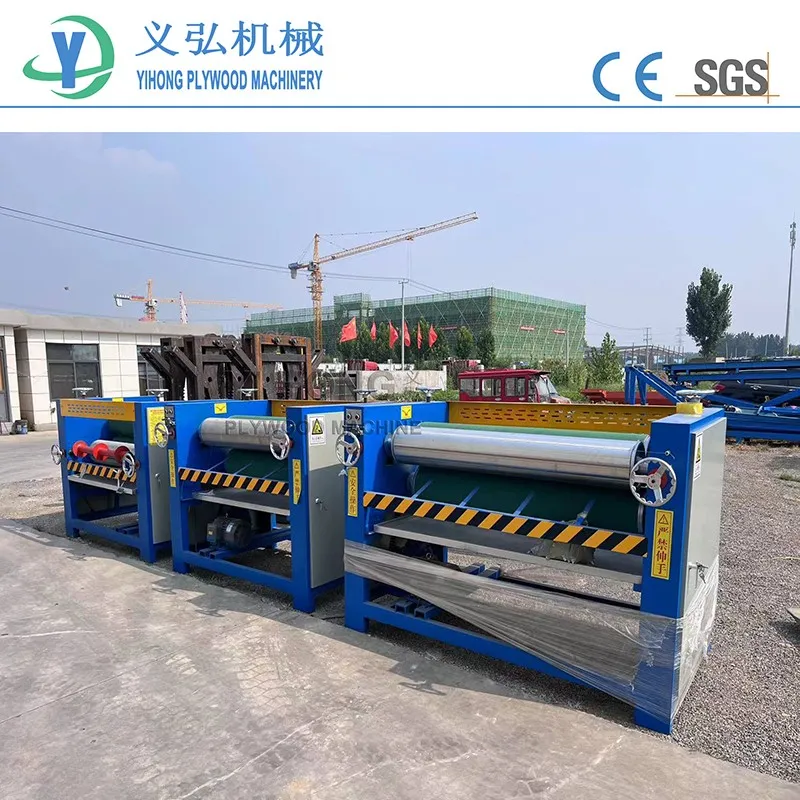
Complementary Machines in the Plywood Production Line
In addition to the Glue Spreading Machine, other machines in the plywood production line also play important roles. The Plywood Turning Machine is used to turn the plywood sheets during the production process, ensuring even glue distribution on both sides. The Melamine Laminated Press Machine is used to apply pressure and heat to the glued plywood sheets, curing the glue and creating a strong bond.
Conclusion
Adjusting the glue spreading pressure according to the glue type is a critical step in ensuring the quality and efficiency of plywood production. By understanding the properties of different types of glue and using the right equipment, such as our Glue Spreading Machine, you can achieve optimal bonding results.
If you're in the plywood production industry and are looking for high - quality glue spreading equipment or need advice on adjusting glue spreading pressure, we're here to help. Contact us to discuss your specific requirements and explore how our products can improve your production process.
References
- "Plywood Production Technology" by John Smith
- "Glue Application in Woodworking" by Jane Doe
- Industry reports on plywood production and glue technology