

In the veneer processing industry, the accuracy of veneer stacking is a critical factor that directly impacts production efficiency, product quality, and overall cost - effectiveness. As a supplier of veneer stacking machines, I've witnessed firsthand the significance of this aspect and have in - depth knowledge about how accurate these machines can be.
The Importance of Stacking Accuracy
Accurate stacking of veneers is fundamental for several reasons. Firstly, in terms of production efficiency, precise stacking allows for seamless integration into subsequent manufacturing processes. When veneers are stacked neatly and accurately, they can be easily transferred to other workstations, reducing the time spent on realigning and handling. This results in a more streamlined production line, ultimately increasing the overall output.
Secondly, product quality is greatly influenced by stacking accuracy. Veneers are often used in high - end furniture, cabinetry, and decorative applications. Any misalignment during stacking can lead to visible defects in the final product, such as uneven surfaces or gaps between layers. By ensuring accurate stacking, we can guarantee a higher quality end - product that meets the strictest industry standards.
Factors Affecting the Accuracy of Veneer Stacking Machines
Machine Design and Technology
The design of a veneer stacking machine plays a crucial role in its stacking accuracy. Modern machines are equipped with advanced sensors and control systems that can detect the position and orientation of each veneer with high precision. For example, optical sensors can be used to measure the edges of the veneers, ensuring that they are aligned correctly before stacking.
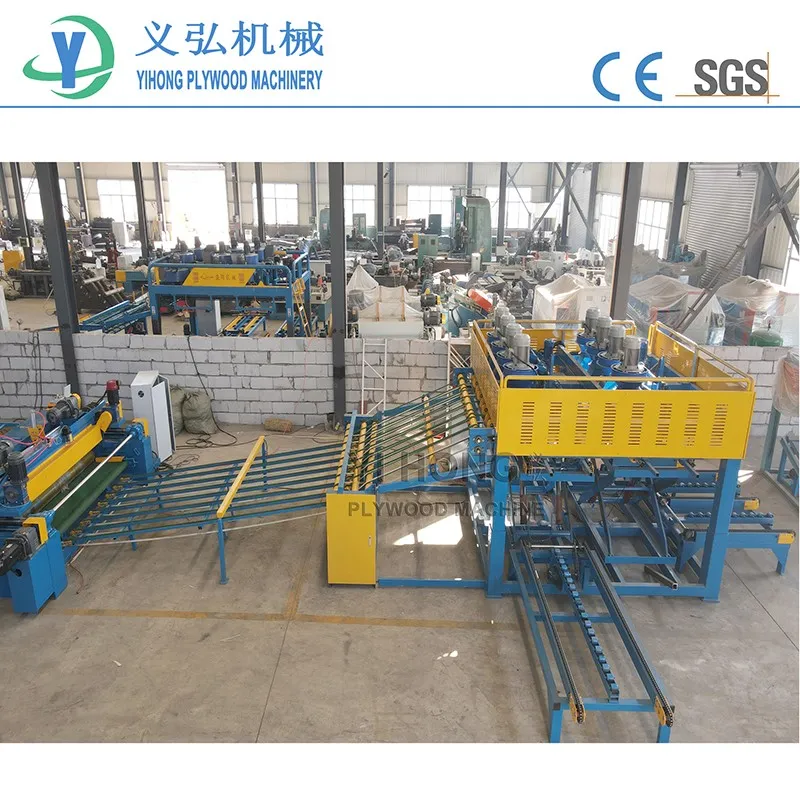
The type of technology employed also matters. Vacuum - based veneer stacking machines, such as the 4 ft Vacuum Veneer Stacking Machine, use suction to hold the veneers firmly in place during the stacking process. This technology provides a high level of control and accuracy, as it can prevent slippage and misalignment. On the other hand, mechanical veneer stacking machines, like the 8 ft Mechanical Veneer Stacking Machine, rely on mechanical arms and guides to position the veneers. While they are also effective, they may be slightly less accurate in some cases due to mechanical wear and tear over time.
Veneer Characteristics
The characteristics of the veneers themselves can also affect the stacking accuracy. Veneers come in different sizes, thicknesses, and moisture contents. Thicker veneers may be easier to handle and stack accurately compared to thinner ones, as they are less prone to bending or warping. Moisture content is another important factor. Veneers with high moisture content may be more flexible and difficult to stack precisely, while overly dry veneers can be brittle and may break during the stacking process.
Operator Skills and Training
Even the most advanced veneer stacking machine requires a skilled operator to achieve optimal accuracy. Operators need to understand the machine's functions, settings, and limitations. They should be able to adjust the machine according to the specific characteristics of the veneers being processed. Regular training programs can help operators improve their skills and ensure that they are using the machine to its full potential.
Measuring the Accuracy of Veneer Stacking Machines
To assess the accuracy of a veneer stacking machine, several key metrics are commonly used.
Alignment Tolerance
Alignment tolerance refers to the maximum allowable deviation from the ideal stacking position. For example, in a high - precision stacking operation, the alignment tolerance for the edges of the veneers may be within ±0.5 mm. A lower alignment tolerance indicates a higher level of accuracy.
Stack Height Consistency
Stack height consistency is another important metric. In a production environment, it is essential that each stack of veneers has a consistent height. Variations in stack height can cause problems during subsequent processing steps, such as in the pressing or laminating operations. A good veneer stacking machine should be able to maintain a stack height consistency within a narrow range, typically within ±1 mm.
Repeatability
Repeatability measures the machine's ability to produce consistent results over multiple stacking cycles. A highly repeatable machine will stack veneers with the same level of accuracy every time, regardless of the number of cycles. This is crucial for large - scale production, where consistency is key to maintaining product quality.
Our Company's Approach to Ensuring High - Accuracy Stacking
As a supplier of veneer stacking machines, we are committed to providing our customers with machines that offer the highest level of accuracy.
Rigorous Testing and Quality Control
Before a machine leaves our factory, it undergoes a series of rigorous tests to ensure its accuracy. We use state - of - the - art measuring equipment to check the alignment tolerance, stack height consistency, and repeatability of each machine. Only machines that meet our strict quality standards are approved for sale.

Continuous Innovation
We are constantly investing in research and development to improve the accuracy of our veneer stacking machines. Our engineering team is always exploring new technologies and design concepts to enhance the performance of our products. For example, we are currently working on integrating artificial intelligence and machine learning algorithms into our control systems to further improve the machine's ability to adapt to different veneer characteristics and stacking requirements.
Customized Solutions
We understand that different customers have different needs when it comes to veneer stacking. That's why we offer customized solutions to meet their specific requirements. Whether it's a small - scale workshop or a large - scale industrial production facility, we can design and manufacture a veneer stacking machine that is tailored to their needs, ensuring the highest level of accuracy in their operations.
Real - World Examples of High - Accuracy Stacking
To illustrate the accuracy of our veneer stacking machines, let's look at some real - world examples.
One of our customers, a leading furniture manufacturer, was facing challenges with inaccurate veneer stacking in their production line. They were experiencing high rejection rates due to misaligned veneers, which was affecting their product quality and profitability. After installing our 8ft Vacuum Veneer Stacking Machine, they noticed a significant improvement in the stacking accuracy. The alignment tolerance was reduced from ±2 mm to ±0.5 mm, and the stack height consistency improved to within ±0.8 mm. As a result, their rejection rates dropped by over 50%, and they were able to increase their production output by 20%.
Conclusion
In conclusion, the accuracy of a veneer stacking machine is a complex but crucial aspect of the veneer processing industry. Factors such as machine design, veneer characteristics, and operator skills all play a role in determining the stacking accuracy. As a supplier, we are dedicated to providing our customers with machines that offer the highest level of accuracy through rigorous testing, continuous innovation, and customized solutions.
If you are in the market for a veneer stacking machine and are looking for a reliable supplier that can guarantee high - accuracy stacking, we would love to hear from you. Please contact us to discuss your specific requirements and explore how our products can benefit your business.
References
- Smith, J. (2020). Veneer Processing Technology. Woodworking Press.
- Johnson, A. (2019). Advances in Veneer Stacking Machines. Industrial Machinery Journal.