

In the dynamic world of plywood manufacturing, the question of whether a plywood forming line can be customized is not just relevant but crucial. As a supplier deeply entrenched in the industry, I've witnessed firsthand the diverse needs and challenges faced by plywood producers. This blog post aims to explore the possibilities, benefits, and considerations of customizing a plywood forming line.

The Case for Customization
The plywood industry is incredibly diverse, with different producers having unique requirements based on their production scale, product type, and quality standards. A one - size - fits - all approach simply doesn't work. Customization allows plywood manufacturers to optimize their production processes, improve efficiency, and enhance the quality of their end products.
For instance, some manufacturers might focus on producing high - end, decorative plywood, which requires a different set of machinery and processes compared to those producing construction - grade plywood. A customized plywood forming line can be tailored to meet these specific needs, ensuring that the production line is perfectly aligned with the manufacturer's goals.
What Can Be Customized in a Plywood Forming Line?
1. Production Capacity
One of the most significant aspects that can be customized is the production capacity. Small - scale manufacturers may require a plywood forming line with a lower output, while large - scale producers need high - speed, high - volume lines. By customizing the production capacity, manufacturers can avoid over - or under - investing in machinery. For example, we can adjust the speed of the conveyors, the number of stations in the line, and the power of the motors to match the desired production volume.
2. Product Size and Thickness
Plywood comes in a wide range of sizes and thicknesses. A customized plywood forming line can be designed to handle different sheet sizes and thicknesses. This flexibility is essential for manufacturers who produce a variety of plywood products. We can modify the cutting and pressing mechanisms to ensure precise sizing and consistent thickness across all sheets.
3. Automation Level
Automation is becoming increasingly important in the plywood industry. Some manufacturers may prefer a fully automated plywood forming line to reduce labor costs and improve production consistency. Others may opt for a semi - automated line, where certain processes are still manually operated. We can customize the automation level of the line, integrating advanced control systems, sensors, and robotics as required.
4. Integration with Other Equipment
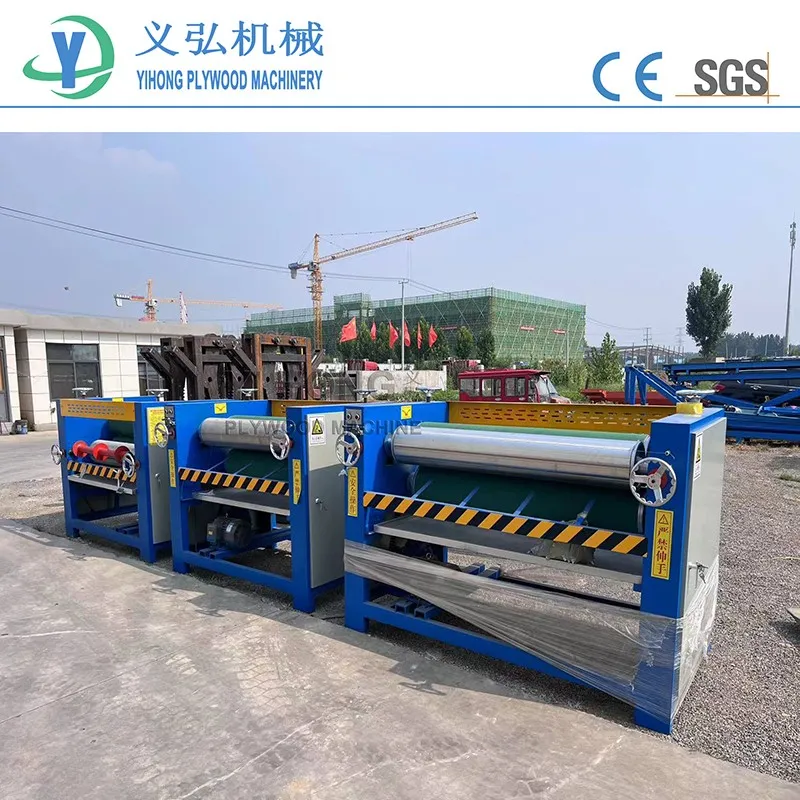
A plywood forming line is often part of a larger plywood production process. It may need to be integrated with other equipment such as Glue Spreading Machine and Double Dimension Saw. Customization allows for seamless integration, ensuring that all equipment works together efficiently. For example, we can design the conveyor systems to transfer materials smoothly between different machines, and develop control interfaces that allow operators to manage the entire production process from a single console.
The Customization Process
As a supplier, our customization process is designed to be customer - centric. It typically starts with an in - depth consultation with the client. During this consultation, we discuss the client's production goals, existing facilities, budget, and any specific requirements. This helps us understand the client's needs thoroughly.
Next, our team of engineers and designers uses advanced software to create a detailed design of the customized plywood forming line. We present the design to the client for review and feedback, making any necessary adjustments based on their input.
Once the design is finalized, we begin the manufacturing process. Our state - of - the - art manufacturing facilities are equipped with the latest technology and machinery, ensuring high - quality production. Throughout the manufacturing process, we maintain close communication with the client, providing regular updates on the progress.
After the plywood forming line is manufactured, we install and commission it at the client's site. Our technicians provide training to the client's operators, ensuring that they are familiar with the operation and maintenance of the equipment. We also offer after - sales support, including spare parts supply and technical assistance.
Benefits of Customizing a Plywood Forming Line
1. Improved Efficiency
A customized plywood forming line is designed to meet the specific needs of the manufacturer, which often leads to improved efficiency. By optimizing the production process, reducing waste, and minimizing downtime, manufacturers can increase their productivity and reduce costs.
2. Higher Quality Products
Customization allows for precise control over the production process, resulting in higher quality plywood products. The ability to adjust the machinery to meet specific product requirements ensures consistent quality across all sheets.
3. Competitive Advantage
In a highly competitive market, having a customized plywood forming line can give manufacturers a significant competitive advantage. It allows them to produce unique products, meet customer demands more effectively, and improve their overall market position.
Considerations for Customization
While customization offers many benefits, there are also some considerations that manufacturers need to keep in mind.
1. Cost
Customizing a plywood forming line can be more expensive than purchasing a standard line. However, it's important to consider the long - term benefits, such as improved efficiency and higher quality products. Manufacturers should conduct a cost - benefit analysis to determine whether customization is the right option for them.
2. Lead Time
Customization typically takes longer than purchasing a standard line. Manufacturers need to plan their production schedules accordingly and factor in the lead time for design, manufacturing, and installation.
3. Technical Expertise
Operating and maintaining a customized plywood forming line may require more technical expertise. Manufacturers need to ensure that their operators are properly trained and that they have access to technical support.
Conclusion
In conclusion, a plywood forming line can definitely be customized. As a supplier, we have the expertise and experience to design and manufacture customized plywood forming lines that meet the unique needs of our clients. Whether you are a small - scale manufacturer looking for a simple, cost - effective solution or a large - scale producer in need of a high - tech, fully automated line, we can help.
If you are interested in learning more about our customized Plywood Forming Line solutions or have any questions about customization, please feel free to contact us. We look forward to discussing your requirements and helping you find the perfect plywood forming line for your business.
References
- Industry reports on plywood manufacturing trends
- Technical specifications of plywood production equipment
- Case studies of customized plywood forming line installations