

As a seasoned supplier of log conveyor lines, I often get asked the question: "Can a log conveyor line be customized?" The short answer is a resounding yes! In this blog post, I'll delve into the details of log conveyor line customization, exploring the various aspects, benefits, and considerations.
The Need for Customization in Log Conveyor Lines
The forestry and lumber industries are incredibly diverse, with each operation having its unique requirements. A one - size - fits - all approach simply doesn't work when it comes to log conveyor lines. Different log sizes, shapes, and densities, as well as varying production volumes and layouts, demand tailored solutions.
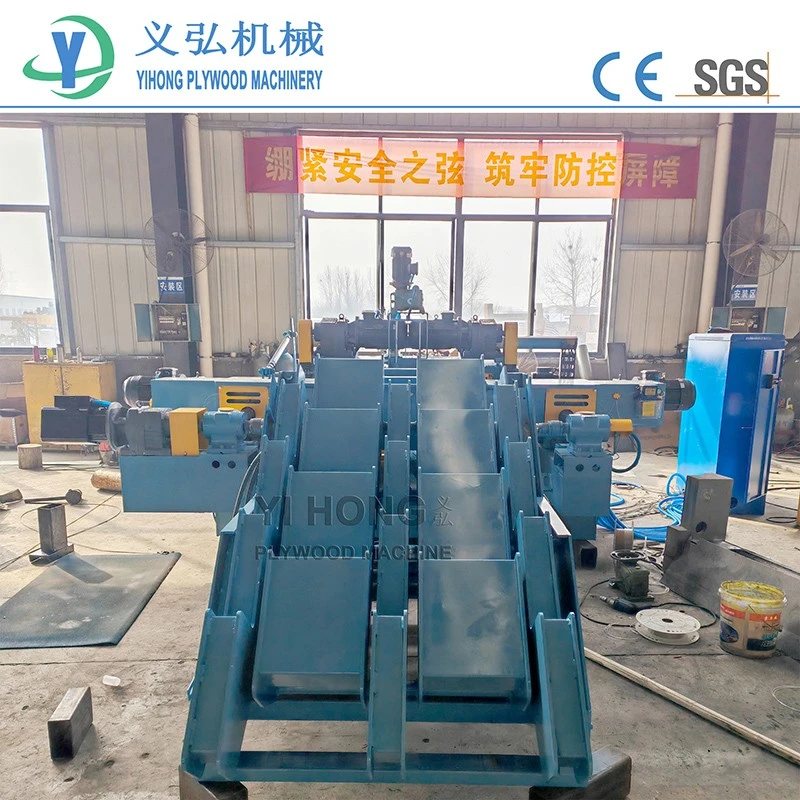

For instance, a small - scale sawmill might have limited space and a relatively low throughput. In such a case, a compact and efficient log conveyor line that can handle smaller logs is required. On the other hand, a large - scale industrial lumber operation may need a high - capacity conveyor system that can move large, heavy logs over long distances quickly.
Components of a Log Conveyor Line and Their Customization
A log conveyor line is made up of several key components, each of which can be customized to meet specific needs.
Log Singulator
The Log Singulator is an essential part of the log conveyor line. Its primary function is to separate individual logs from a group, ensuring a smooth and continuous flow. Customization of a log singulator can involve adjusting the size of the separation mechanism to accommodate different log diameters. For example, if a mill primarily deals with small - diameter logs, the spacing between the separating elements can be reduced. Additionally, the speed and force of the singulation process can be customized to match the type of logs being processed. Softwood logs may require a gentler singulation process compared to hardwood logs, which are denser and more rigid.
Log Loading Deck
The Log Loading Deck is where logs are initially loaded onto the conveyor line. Customization of the loading deck can focus on its size, shape, and loading mechanism. For operations that receive logs in large bundles, a wider and more robust loading deck may be needed. The loading mechanism can also be customized; some mills may prefer a manual loading system for flexibility, while others may opt for an automated system to increase efficiency. Automated loading systems can be programmed to handle different log sizes and weights, and they can be integrated with other parts of the conveyor line for seamless operation.
Hydraulic Log Pusher
The Hydraulic Log Pusher is used to move logs along the conveyor line, especially in situations where gravity alone is not sufficient. Customization of the hydraulic log pusher can involve adjusting the pushing force and speed. For heavy - duty applications, a more powerful hydraulic system may be required to move large and heavy logs. The stroke length of the pusher can also be customized to match the length of the logs being processed. Additionally, the control system of the hydraulic log pusher can be customized to interface with other components of the conveyor line, allowing for coordinated operation.
Design and Layout Customization
The design and layout of a log conveyor line are crucial for its efficient operation. Customization in this area can take into account the available space in the mill, the flow of materials, and the safety requirements.
In a mill with limited floor space, a compact and space - saving conveyor line design may be necessary. This could involve using vertical or inclined conveyors to maximize the use of available height. The layout can also be customized to ensure a logical flow of logs through the mill. For example, the conveyor line can be designed to feed logs directly into the sawing equipment, minimizing the need for additional handling and reducing the risk of damage to the logs.
Safety is another important consideration in the design and layout of a log conveyor line. Customization can include the installation of safety guards, emergency stop buttons, and warning signs at strategic locations. The conveyor line can also be designed to minimize the risk of log jams, which can be dangerous and cause downtime.
Benefits of Customized Log Conveyor Lines
Increased Efficiency
A customized log conveyor line is designed to match the specific needs of a mill, which can lead to significant increases in efficiency. By optimizing the speed, capacity, and flow of the conveyor line, mills can process more logs in less time. For example, a customized log singulator can ensure a continuous and smooth flow of logs, reducing the chances of bottlenecks and downtime.
Improved Quality
Customization allows for better handling of logs, which can improve the quality of the final product. By adjusting the components of the conveyor line to match the characteristics of the logs, such as size and density, the risk of damage to the logs during transportation is reduced. This results in higher - quality lumber products.
Cost - Savings
Although the initial investment in a customized log conveyor line may be higher than that of a standard system, the long - term cost - savings can be substantial. A customized system is more efficient, which means lower energy consumption and reduced labor costs. Additionally, by minimizing the risk of log jams and equipment breakdowns, the maintenance costs of the conveyor line can be significantly reduced.
Considerations When Customizing a Log Conveyor Line
Technical Expertise
Customizing a log conveyor line requires a high level of technical expertise. It is important to work with a supplier who has a deep understanding of the forestry and lumber industries, as well as the engineering principles involved in conveyor line design. A knowledgeable supplier can help you identify your specific needs and design a conveyor line that meets those needs effectively.
Budget
Customization comes at a cost, and it is important to have a clear budget in mind before starting the customization process. While a customized log conveyor line can offer significant benefits, it is essential to ensure that the cost is justified by the expected returns. A good supplier can work with you to find a balance between your budget and your requirements.
Future Expansion
When customizing a log conveyor line, it is important to consider future expansion plans. The conveyor line should be designed in such a way that it can be easily expanded or modified to accommodate increased production volumes or changes in the type of logs being processed. This can save you from having to replace the entire conveyor line in the future.
Conclusion
In conclusion, a log conveyor line can definitely be customized to meet the unique needs of different forestry and lumber operations. From the individual components such as the log singulator, log loading deck, and hydraulic log pusher to the overall design and layout, every aspect of the conveyor line can be tailored to optimize efficiency, improve quality, and save costs.
If you're in the market for a log conveyor line and are considering customization, I encourage you to reach out. Our team of experts is ready to work with you to understand your specific requirements and design a customized log conveyor line that meets your needs. Whether you're a small - scale sawmill or a large - scale industrial operation, we have the knowledge and experience to provide you with a solution that delivers results.
References
- "Conveyor Systems Handbook" by Conveyor Equipment Manufacturers Association
- "Forest Products Processing Technology" by various industry experts