

Log infeed lines play a crucial role in the forestry and wood processing industries, ensuring a continuous and efficient supply of logs to processing machinery. As a reputable log infeed lines supplier, I've witnessed the remarkable advancements in this technology over the years. However, one question that often arises in discussions with our clients is whether log infeed lines are affected by software bugs. In this blog post, I'll delve into this topic, exploring the potential impact of software bugs on log infeed lines and discussing strategies to mitigate these risks.
The Growing Role of Software in Log Infeed Lines
Modern log infeed lines are no longer just mechanical systems; they are complex integrated systems that rely heavily on software to operate efficiently. Software controls various aspects of log infeed lines, including log sorting, singulation, feeding, and conveyor speed regulation. This digitalization brings numerous benefits, such as increased precision, improved productivity, and enhanced flexibility. For example, software - controlled Log Feeding Singulator can accurately separate logs, ensuring a consistent flow of logs to the processing equipment.
Potential Impact of Software Bugs
Despite the many advantages of software - driven log infeed lines, they are not immune to software bugs. Software bugs can manifest in various forms, from simple coding errors to more complex algorithmic glitches. These bugs can have several detrimental effects on log infeed lines:

Operational Disruptions
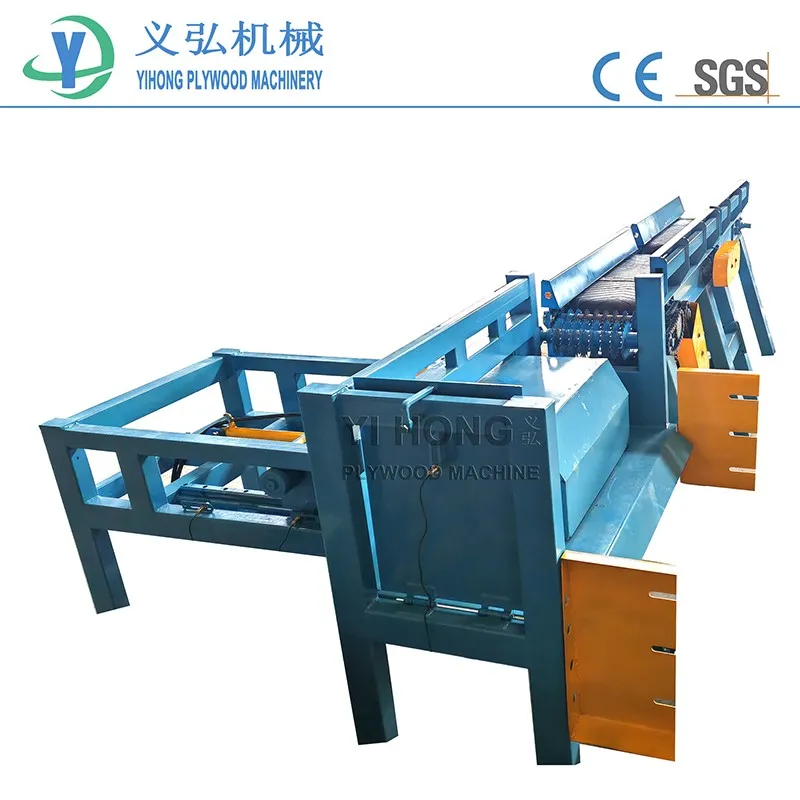
One of the most immediate impacts of software bugs is operational disruptions. A bug in the log sorting algorithm, for instance, could lead to misclassification of logs, causing them to be sent to the wrong processing stations. This not only disrupts the production flow but can also lead to increased downtime as operators work to correct the issue. In some cases, a software bug might cause the Log Conveyor Line to stop unexpectedly, halting the entire log infeed process.
Safety Risks
Software bugs can also pose safety risks. If the control software for the Hydraulic Log Pusher malfunctions, it could push logs with excessive force or at the wrong angle. This could potentially cause logs to be ejected from the infeed line, endangering the safety of nearby workers. Moreover, a bug in the emergency stop system's software could prevent operators from quickly halting the equipment in case of an emergency.
Product Quality Issues
Inaccurate software control can result in product quality issues. For example, if the software fails to regulate the feeding speed of logs properly, it can lead to uneven cutting or processing of the logs. This can result in sub - standard wood products, which may not meet industry specifications and could lead to customer dissatisfaction.
Causes of Software Bugs in Log Infeed Lines
There are several factors that can contribute to the presence of software bugs in log infeed lines:
Complexity of Software Systems
The software used in log infeed lines is becoming increasingly complex as more features and functions are added. With more lines of code and intricate algorithms, the likelihood of coding errors increases. Additionally, integrating different software components from various sources can also introduce compatibility issues and bugs.
Inadequate Testing
Insufficient testing during the software development process is another common cause of bugs. In some cases, developers may not have access to a full - scale log infeed line for comprehensive testing. As a result, some bugs may go undetected until the software is deployed in a real - world environment.
Environmental Factors
Log infeed lines operate in harsh industrial environments, which can also contribute to software bugs. Dust, moisture, and electrical interference can affect the performance of the software - controlled systems. For example, electrical interference can corrupt data transmission, leading to incorrect software responses.
Strategies to Mitigate the Impact of Software Bugs
As a log infeed lines supplier, we are committed to helping our clients minimize the impact of software bugs. Here are some strategies we recommend:
Robust Software Development Practices
Implementing rigorous software development practices is crucial. This includes following coding standards, conducting thorough code reviews, and performing extensive debugging. By using reliable software development methodologies, such as Agile or Waterfall, developers can identify and fix bugs early in the development cycle.
Regular Software Updates and Patches
Software vendors should provide regular updates and patches to address known bugs and security vulnerabilities. Our company ensures that our clients receive timely software updates for their log infeed lines. These updates not only fix bugs but also introduce new features and improvements to enhance the overall performance of the system.
Redundancy and Backup Systems
Incorporating redundancy and backup systems can help minimize the impact of software bugs. For example, having multiple sensors and control systems can ensure that if one system fails due to a bug, another can take over. Additionally, regular data backups can prevent data loss in case of a software malfunction.
Employee Training
Properly trained employees can play a significant role in detecting and mitigating the effects of software bugs. We provide comprehensive training programs for our clients' operators, teaching them how to recognize the signs of software bugs and how to perform basic troubleshooting tasks.
Conclusion
In conclusion, while software bugs can pose challenges to the operation of log infeed lines, with the right strategies in place, their impact can be effectively managed. As a leading log infeed lines supplier, we are dedicated to providing high - quality, reliable, and bug - free systems to our clients. Our commitment to robust software development, continuous improvement, and customer support ensures that our log infeed lines meet the highest industry standards.
If you are in the market for log infeed lines or have any questions about software reliability and bug mitigation, we encourage you to reach out. Our team of experts is ready to assist you in finding the best solutions for your wood processing needs. Whether it's a new installation or an upgrade to your existing system, we are here to support you every step of the way.
References
- Cook, D. (2018). Industrial Software Quality Assurance. Springer.
- Kembhavi, A. (2020). Software Engineering in Industrial Automation. Wiley.
- Sommerville, I. (2016). Software Engineering. Pearson.